
Cataracts, Eye Health, LASIK, Uncategorized
If you’re tired of relying on glasses or contact lenses, you’ve probably heard of LASIK. But what many people don’t realize is that LASIK isn’t the only option available. For some patients, Refractive Lens Exchange (RLE), also known as Clear Lens Exchange, may actually provide better long-term vision correction.
At McFarland Eye Care, our goal is not to sell you a procedure. It’s to help you find the vision correction option that best fits your eyes, lifestyle, and future vision goals. Understanding the differences between LASIK and RLE can help you make an informed decision about your vision.
What Is LASIK?
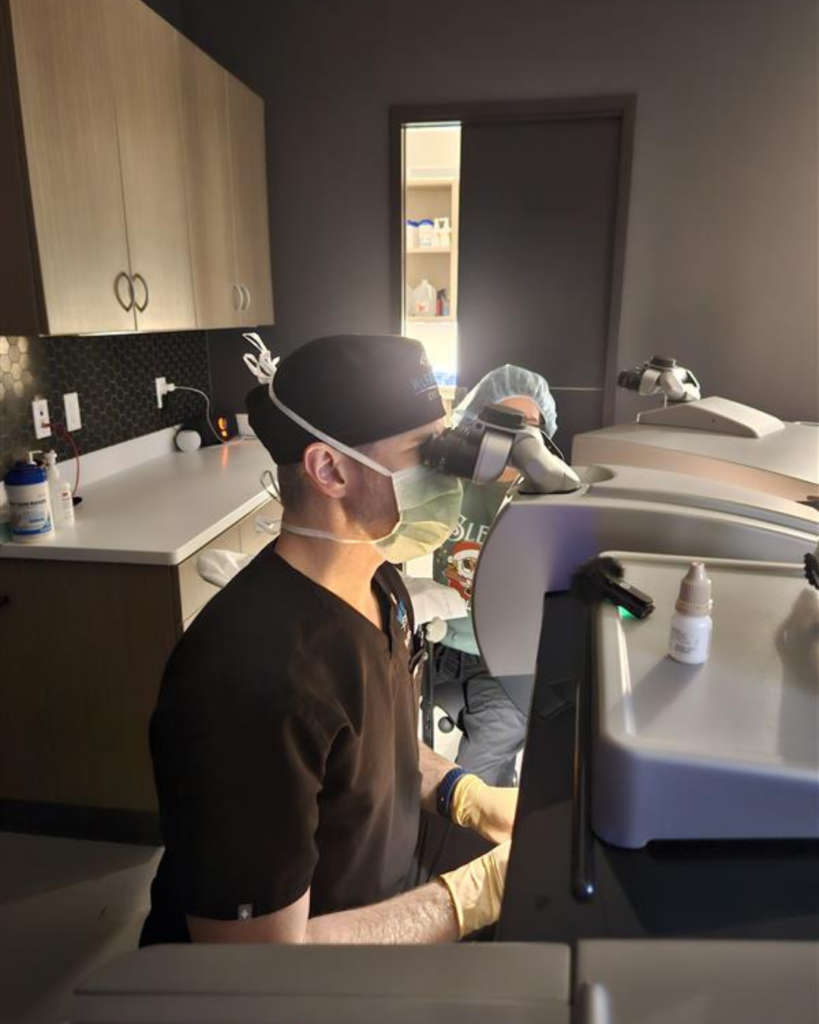
LASIK is one of the most popular vision correction procedures in the world. During LASIK, a laser reshapes the cornea to correct refractive errors such as:
- Nearsightedness (Myopia)
- Farsightedness (Hyperopia)
- Astigmatism
The procedure is quick, virtually painless, and most patients notice improved vision within 24 hours.
LASIK Benefits
- Fast recovery
- Minimal discomfort
- Reduced dependence on glasses and contacts
- Long-lasting vision correction
- Proven safety and effectiveness
For younger patients with healthy eyes and stable prescriptions, LASIK is often an excellent solution.
Who Is a Good Candidate for LASIK?
LASIK may be right for you if you:
- Are over age 18
- Have a stable prescription
- Have healthy corneas
- Have mild to moderate refractive errors
- Do not have significant cataracts or other eye diseases
However, LASIK is not ideal for everyone. As we age, our eyes naturally undergo changes that LASIK cannot prevent.
What Is Refractive Lens Exchange (RLE)?
Refractive Lens Exchange is a vision correction procedure that replaces your eye’s natural lens with an advanced intraocular lens (IOL), similar to the lens used during cataract surgery.
While LASIK reshapes the cornea, RLE addresses vision at the lens level.
This procedure is especially beneficial for patients who:
- Are over age 45
- Need reading glasses or bifocals
- Have significant farsightedness
- Are not ideal LASIK candidates
- Want to reduce their future risk of cataracts
One of the unique benefits of Refractive Lens Exchange (RLE) is that it prevents future cataracts. Because the procedure replaces the eye’s natural lens with a premium artificial lens, cataracts can no longer form, eliminating the need for cataract surgery later in life.
LASIK vs. RLE: What’s the Difference?
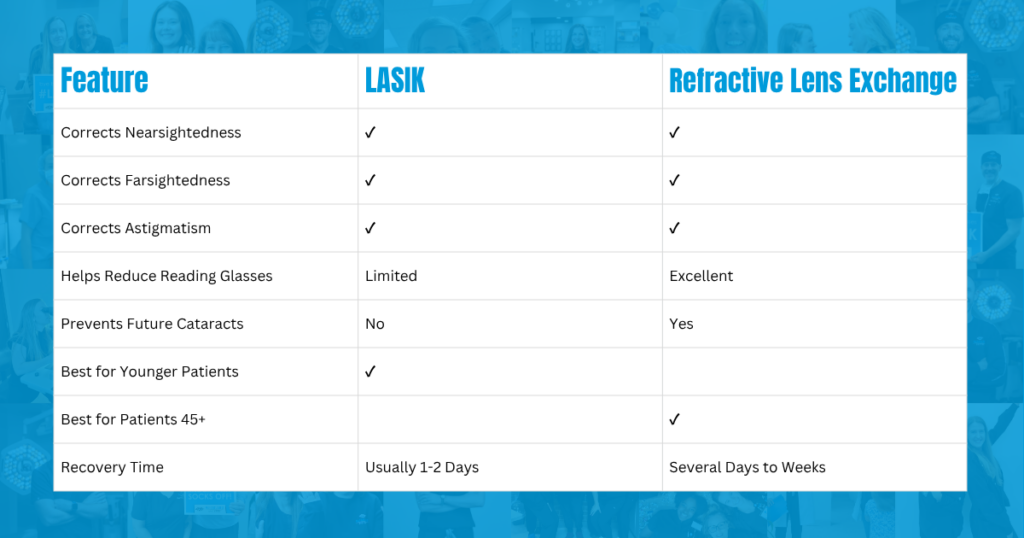
The best procedure often depends more on your age and visual goals than your prescription alone.
Why Age Matters
One of the biggest factors in determining whether LASIK or RLE is right for you is age.
Patients Under 40
Most younger patients with healthy eyes are often excellent LASIK candidates. Their natural lens still focuses well at multiple distances, making LASIK an effective solution for reducing dependence on glasses and contacts.
Patients Over 45
Many adults begin noticing the effects of presbyopia, the age-related loss of near vision. Reading glasses become necessary, and vision may fluctuate more throughout the day.
For these patients, RLE can often provide a more comprehensive and long-lasting solution.
Instead of correcting vision temporarily and then addressing cataracts later, RLE allows patients to address both concerns with one procedure.
Explore Your Premium Lens Options
One of the most exciting advancements in modern vision correction is the variety of premium lens options available today. These advanced lenses can help reduce dependence on glasses for distance, intermediate, and near vision, allowing treatment to be tailored to your lifestyle and visual goals.
It’s important to understand that not every premium lens is available with every procedure. Certain lens technologies may be better suited for cataract surgery, while others may be recommended during Refractive Lens Exchange. The right combination of procedure and lens depends on factors such as your age, eye health, prescription, daily activities, and long-term vision goals.
To help you better understand your options, explore our Premium Lens Simulator. This interactive tool allows you to experience how different premium lens technologies may affect your vision before making a decision.
During your consultation, our surgeons will evaluate your eyes, discuss your lifestyle needs, and help determine which procedure and lens option may provide the best visual outcome for you. There is no one-size-fits-all solution, which is why a personalized evaluation is the most important step in your vision correction journey.
What About Cataracts?
Cataracts are a natural part of aging and affect nearly everyone eventually.
Because RLE replaces the eye’s natural lens, patients who undergo RLE will never need cataract surgery in that eye later in life.
This is one reason many patients in their 50s and 60s choose RLE instead of LASIK.
You can learn more about our Cataract Surgery Options and how modern lens technology is transforming vision correction.
How Do I Know Which Procedure Is Right for Me?
The answer depends on several factors:
- Your age
- Prescription
- Eye health
- Lifestyle
- Visual goals
- Desire for reading glasses
- Long-term vision plans
The best way to determine your candidacy is through a comprehensive evaluation with one of our experienced surgeons.
Meet Our Vision Correction Specialists
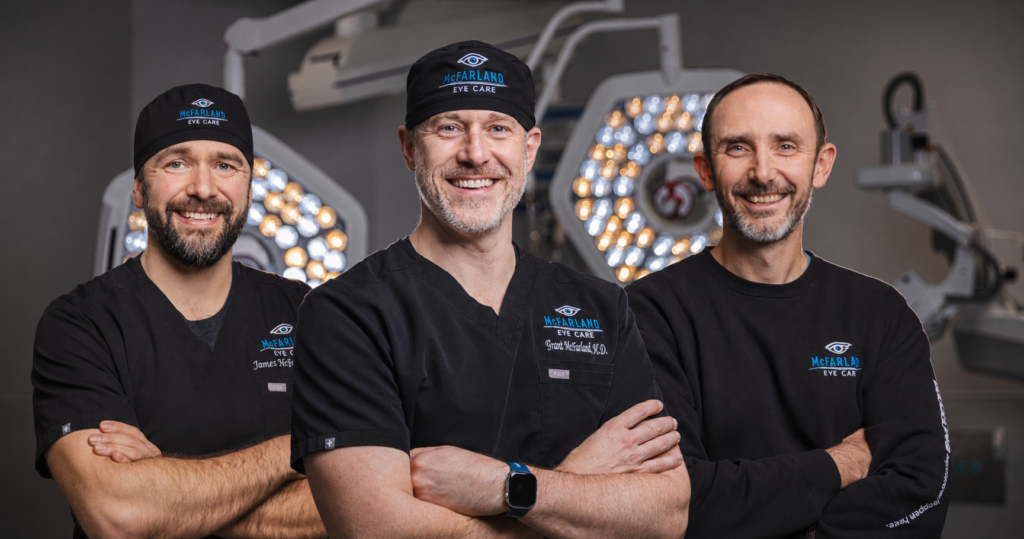
At McFarland Eye Care, patients trust experienced surgeons like Dr. Evan Newbolt, Dr. James Hoffmann, and Dr. Donald Gauldin to help them explore their vision correction options and create a personalized treatment plan. Whether you’re considering LASIK, Refractive Lens Exchange, cataract surgery, or premium lens technology, our surgeons take the time to understand your vision goals and recommend the treatment option that best fits your lifestyle and long-term eye health.
Learn more about Dr. Evan Newbolt, Dr. James Hoffmann, and Dr. Donald Gauldin.
Take the First Step Toward Visual Freedom
Whether you’re considering LASIK, Refractive Lens Exchange, or simply want to learn more about your options, the first step is scheduling a consultation.
Our team will evaluate your vision, discuss your goals, and help determine which procedure is best suited for your lifestyle and long-term eye health.
👉 Schedule Your Vision Correction Consultation Today